THEY'RE POISONING THE SEED: How a Single Strait 7,000 Miles Away Is About to Starve 2 Billion People—And Why Your Government Already Knows

EDITOR’S NOTE: What you’re about to read isn’t coming from some fringe blog or doomsday cult. These are the numbers that keep people like Steve Keen awake at night—numbers that don’t care about your political affiliation, your stock portfolio, or how many cans of beans you’ve got stashed in the garage. We didn’t want to run this story. We’d rather tell you everything’s fine, that the system works, that smart people in charge have it all figured out. But that’s not what the math says. That’s not what the supply chains are whispering. And that’s definitely not what the empty shelves in places like Sri Lanka and Argentina were trying to tell us before the rest of us stopped listening. Read it or don’t. The fertilizer doesn’t care either way.
You probably didn’t notice. Most people don’t. While you were arguing about whatever culture war garbage filled your feed last week, the price of urea—a compound most Americans couldn’t identify if it showed up on a chemistry test—quietly hit $520 per metric ton on the Gulf Coast. That’s up from $380 in January. Up from $210 in 2020. And if a handful of economists who’ve made careers out of being right when everyone else was wrong are correct, you’re going to wish you’d paid attention.
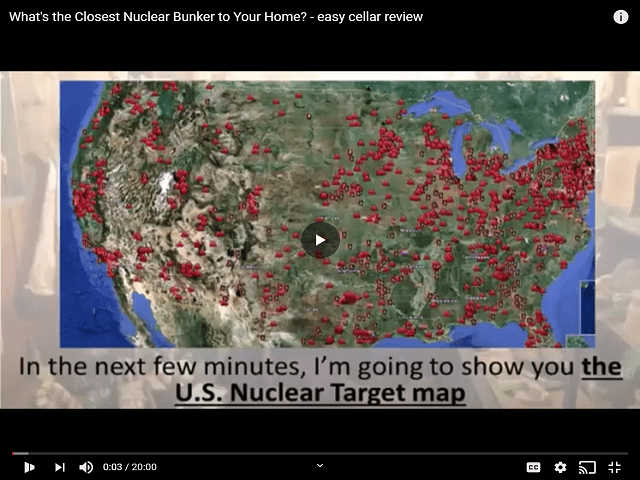
You might be living in one of America’s deathzones and not have a clue about it
What if that were you? What would YOU do?
Steve Keen doesn’t look like a prophet of doom. He looks like your uncle who fixes vintage motorcycles and drinks too much coffee at family gatherings. But this is the same guy who saw 2008 coming while the CNBC crowd was still hyping subprime mortgages as “innovation.” Now he’s staring at something that makes the housing crisis look like a rounding error.
Here’s the thing nobody wants to say out loud: we’ve built a food system that requires burning fossil fuels to feed half the planet. The Haber-Bosch process sounds like something from a steampunk novel, but it’s the invisible scaffolding holding up modern civilization. Take nitrogen from the air. Combine it with hydrogen from natural gas. Make ammonia. Make fertilizer. Make enough food for 4 billion people who would otherwise starve.
It’s elegant. It’s also fragile as hell.
About one in ten tons of that fertilizer comes from one place. One. The Persian Gulf. You know, that region that’s been a geopolitical tinderbox since before most of us were born. The Strait of Hormuz—21 miles wide at its narrowest point—handles roughly 20% of global petroleum shipments and, critically, the natural gas feedstocks that keep the fertilizer plants humming from Qatar to Saudi Arabia.
Keen’s math is brutal in its simplicity. Disrupt that supply—say, with another round of “limited military action” that somehow never stays limited—and you’re not looking at higher prices. You’re looking at 400 million human food rations vanishing every single day. Not next decade. Not in some dystopian future. By 2027. As in, the year after next.
Let that settle. 400 million. Daily.
The lag time is what gets you. Fertilizer applied today determines harvests 12 to 18 months from now. Which means the decisions being made in boardrooms and war rooms right now—summer of 2026—are already writing the hunger scripts for 2027 and 2028. The corn isn’t worried about your portfolio. The wheat doesn’t check polling data. It either gets nitrogen or it doesn’t. And if it doesn’t, you learn what your grandparents knew: food insecurity isn’t a spreadsheet problem. It’s a stomach problem.
Ed Dowd’s been watching another pressure cooker. The former BlackRock money manager—guy managed billions, not millions—has been tracking something that should terrify anyone who remembers what $147 oil felt like in 2008. Back in April, when the Iran situation looked like it might resolve, Dowd laid out two scenarios. One where diplomacy worked, oil peaked around $125, and we all got to pretend normal was still on the menu. Another where it didn’t.
The Memorandum of Understanding that was supposed to buy breathing room? Torn up. Shredded. Gone. Oil’s back above $80 and climbing. And Dowd’s been around long enough to know what happens when energy markets get spooked.
“We’re talking about $200 to $250 in a worst-case scenario,” he said last week. Not screaming. Not pumping hyperbole. Just stating facts the way you state that water’s wet or fire’s hot. At those prices, the entire just-in-time logistics machine that feeds 8 billion people starts to seize. Trucks park because diesel costs more than the cargo pays. Ships slow-steam or don’t sail at all. And the fertilizer plants? The ones that need natural gas like you need oxygen? They shut down. Not because of regulation. Not because of ESG scores. Because the math stops working.
But here’s where it gets really ugly. Where the food crisis and the energy crisis and the financial crisis start holding hands and skipping toward the cliff together.
You know what else doesn’t work at $250 oil? The AI revolution.
Dowd’s been banging this drum for months while the NVDA faithful kept buying every dip. “The stock market is 45% AI and AI-adjacent,” he keeps saying. Forty-five percent. Nearly half the value of American equities resting on the assumption that we’re entering some exponential age of artificial intelligence that will transform everything forever.
Maybe. Or maybe we’re looking at the biggest wealth destruction event in modern history.
The data centers powering this supposed revolution already consume more electricity than most countries. Training the next generation of large language models requires energy inputs that make the old industrial revolution look like a campfire. And that’s before you factor in the chip fabrication—TSMC’s plants in Taiwan use more water daily than some cities, and more power than you want to think about.
At $200 oil? At electricity prices that make Bitcoin mining look economical? The whole thesis collapses. Not gradually. Not gracefully. The way bubbles always collapse: suddenly, violently, taking out the overleveraged and the overconfident in equal measure.
Warren Buffett sees it. The man’s sitting on more cash than the GDP of some developed nations. Not because he’s bearish on America. Because he’s seen this movie before. Cash isn’t trash when everything else is on fire. Cash is dry powder. Cash is the ability to buy when blood runs in the streets.
The rest of us? The retail investors who bought the ARK funds at the top? The 401k holders who believed “stocks always go up in the long run”? They’re going to learn what “long run” means when you’re 62 and watching your retirement evaporate into a margin call.
THE SHELVES ARE ALREADY EMPTY SOMEWHERE

What we’re describing isn’t theoretical. It’s already happening in pockets most Westerners ignore until the images show up on their feeds. But the pattern is the pattern. And the pattern says we’re closer than anyone wants to admit.
• Sri Lanka, 2022: Import restrictions + fertilizer ban + currency collapse = 90% food inflation and nationwide riots. The government fell. People died. The world moved on.
• Argentina, 2023-2024: Annual inflation north of 200%. A population that remembers what real hunger looks like starting to stockpile again. The peso becoming wallpaper.
• Nigeria, 2024-2025: 47% of households reporting food insecurity. A nation that should be an agricultural powerhouse importing basic staples because the infrastructure collapsed and the farmers couldn’t afford inputs.
• Global fertilizer stocks, 2026: Down to 60 days of consumption in key markets. The buffer is gone. The margin for error is zero.
• Wheat futures, July 2026: Up 34% since January. Corn following. Soybeans too. The markets are pricing in something the news hasn’t fully reported yet.
The thing about complex systems is they don’t fail linearly. They absorb stress, absorb stress, absorb stress—then they snap. The straw that breaks the camel’s back isn’t necessarily heavier than the others. It’s just the one that arrived when the camel was already carrying all it could.
We’re there. The camel’s knees are shaking.
Ask anyone who actually grows food for a living—not the Instagram homesteaders with their aesthetic chicken coops, but the people managing 10,000-acre operations in Iowa or Ukraine or Brazil. They’ll tell you. Input costs are murder. Equipment financing is getting tight. The big ag companies are consolidating, squeezing, preparing for something they won’t name in earnings calls but clearly see coming.
And the weather isn’t helping. The Mississippi River hit record lows again this spring, backing up grain shipments. The Panama Canal restricted traffic through 2024 due to drought—first time in history. Europe’s had three “once-in-a-century” droughts in the last five years. Australia’s wheat belt is either flooding or burning, never just growing.
You can dismiss climate talk if you want. The farmers can’t. They’re watching their planting windows shrink, their crop insurance rates climb, their groundwater tables drop. They’re watching the aquifers that irrigate 40% of American agriculture deplete in real-time, measuring the decline in feet per year, knowing that fossil water doesn’t recharge on human timescales.
So you’ve got energy instability. Fertilizer scarcity. Water depletion. Soil degradation. Financial bubbles. Geopolitical flashpoints. And a global population that added 80 million mouths last year alone.
Any one of these is manageable. Two is concerning. Three starts looking like 2008 again. But all of them? All of them simultaneously?
That’s different. That’s the kind of concatenation that doesn’t produce a recession. It produces something we don’t have good words for yet. “Collapse” feels too dramatic until you’re watching it. “Crisis” feels too temporary. “Transition” implies there’s somewhere we’re transitioning to that’s better.
What if there isn’t?
The 2020s have already been a masterclass in how fast normal can evaporate. March 2020. February 2022. October 2023. Dates that started as calendar entries and became dividing lines between before and after. The next one is coming. The fertilizer shipments don’t lie. The oil futures curve doesn’t lie. The emptying grain silos in the Black Sea region don’t lie.
And when it hits—when the 2027 harvests come in 30% short, when the rationing starts, when the developed world discovers what the developing world has known for decades about the fragility of abundance—the explanations will come fast and furious. It was Putin’s fault. It was Iran’s fault. It was climate change. It was speculators. It was the Fed. It was anyone and anything except the obvious truth: we built a system that required infinite growth on a finite planet, and the bill is coming due.
The economists warning about this aren’t radicals. They’re not preppers in bunkers waiting for the end times. They’re people who looked at the data, ran the models, and realized the models were screaming. Keen’s been called an alarmist before. He was right then. Dowd’s been called a permabear. He was right about the vaccine data, right about the excess mortality, right about more than his critics want to admit.
Maybe they’re wrong this time. Maybe the diplomats pull a rabbit from the hat. Maybe the AI revolution really does unlock energy abundance. Maybe we invent nitrogen-fixing wheat tomorrow and this all becomes a historical footnote about close calls.
But that’s not where the smart money is betting. That’s not what the supply chain data shows. That’s not what the emptying aquifers and burning forests and spiking input costs are telling anyone willing to listen.
The thing about tipping points is you don’t know you’ve crossed them until you’re already falling. Ask the Romans. Ask the Mayans. Ask anyone who woke up one morning in a world they’d taken for granted and found it transformed into something unrecognizable.
We’re not there yet. But we can see it from here. The 2026 harvest is in the ground, dependent on fertilizer applications made when prices were already high. The 2027 planting season is when Keen says the shortages hit. Eighteen months. Maybe less.
What are you going to do with eighteen months?
Most people will do what they always do: hope. Hope that someone fixes it. Hope that technology saves us. Hope that the people in charge—those people, the ones who’ve demonstrated such stunning competence these last few years—have a plan.
Others will prepare. Not in the Hollywood bunker sense, though there’s plenty of that happening in certain zip codes. But in the quiet, practical ways that actually matter when systems fail. Learning to grow food. Building relationships with neighbors. Reducing dependencies. Creating redundancy. Accepting that resilience looks a lot like the past we abandoned for convenience, and that convenience was always a luxury item we mistook for a right.
The truth is, nobody knows exactly how this plays out. Complex systems are complex. The interactions between energy markets and agricultural output and financial leverage and geopolitical conflict create emergent properties no model fully captures. Maybe we muddle through. Maybe it’s bad but not catastrophic. Maybe human ingenuity pulls another rabbit from the hat.
Or maybe the rabbit died in 2022 and we’ve been running on momentum ever since.
What we know is this: the fertilizer is getting expensive. The oil is getting volatile. The AI bubble is getting heavy. The water is running out. The soil is wearing out. The weather is getting weird. The debt is compounding. And the people warning about it loudest are the ones who’ve been right before when everyone else was wrong.
You don’t have to believe the worst case. But you’d be a fool not to consider it. Not to look at the convergence of factors and recognize that something unprecedented is gathering force at the intersection of energy, food, finance, and climate. Not to ask yourself what you’d do if the grocery store shelves looked like that photo above not in some distant failed state, but in your town. Your neighborhood. Your kitchen.
Because that’s the question 2027 is asking. That’s the math that doesn’t care about your politics or your portfolio or your plans. Two billion people at risk. Not from war. Not from plague. From the simple, brutal reality that you can’t eat money, you can’t drink semiconductor chips, and you can’t fertilize crops with AI-generated optimism.
The harvests are coming. Or they aren’t. And either way, we’re about to find out what happens when the most complex civilization in human history tests the limits of its own complexity.
Sleep tight. The fertilizer plants are still running. For now.


i listen to many youtube prepper channels and they are all saying something similar.
ReplyDelete